
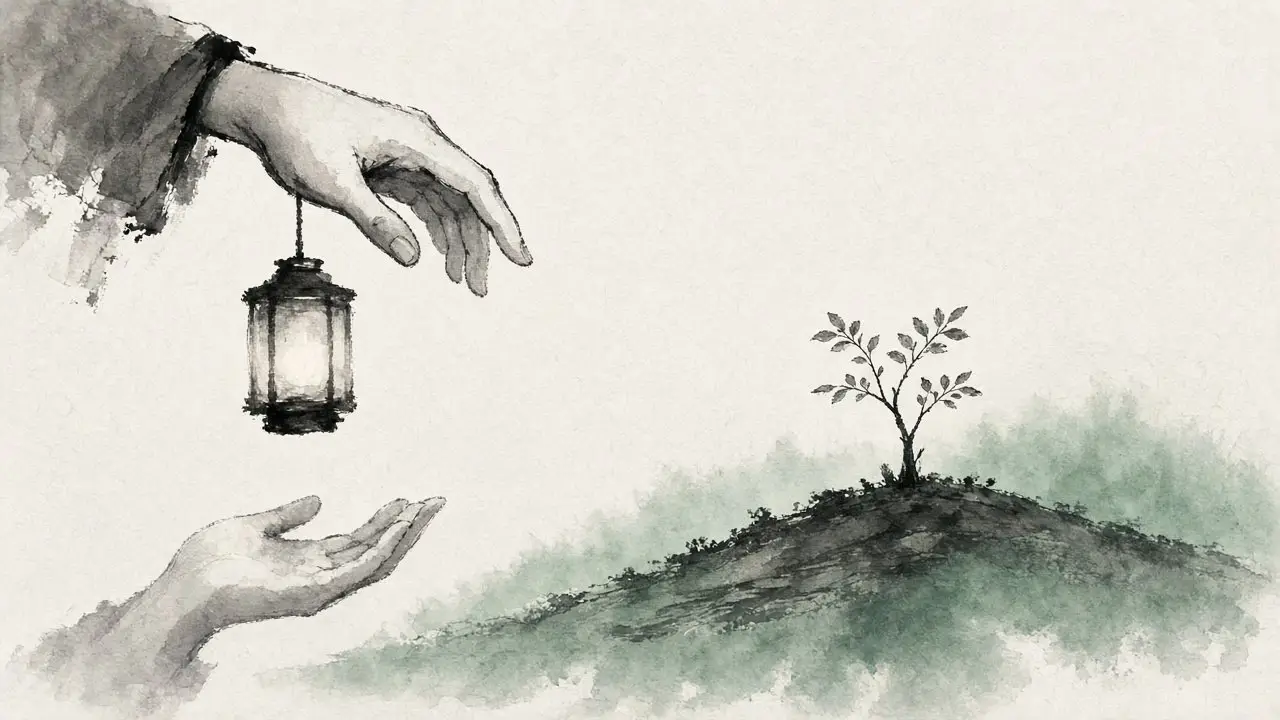
If you love someone who is still drinking or using, you know the feeling. The phone rings late at night and your stomach drops. You lie awake running the “what ifs.” You’d do anything to make it stop.
That last part, “anything,” is where a lot of good, loving people get stuck. Because some of what we do out of love actually makes it easier for the addiction to keep going.
This post is for the parents, spouses, kids, brothers, sisters, and friends. You matter in this story too.
Support or enabling? Here’s the difference
Over more than 40 years in human services, I’ve sat with a lot of families trying to figure this out. Here’s the simplest way I know to say it:
- Support helps the person move toward recovery and take responsibility.
- Enabling protects the person from the consequences of their use, so the use can continue.
Paying for a treatment program is support. Paying the rent after the rent money went to drugs, for the third month running, is usually enabling. Driving someone to a detox is support. Calling their boss to say they have “the flu” is enabling.
Enabling almost never comes from a bad place. It comes from love, fear, guilt, and exhaustion. But consequences are often what finally get a person’s attention. Years ago I wrote about consequences, cravings, and contradictions, and the first one is the big one. Real change often starts with real pain. When we keep absorbing all the pain for them, they don’t feel the need to change.
You didn’t cause it, and you can’t control it
A saying many families learn goes like this: you didn’t cause it, you can’t control it, and you can’t cure it. Read that one more time. It’s not giving up. It’s letting go of a job that was never yours.
That frees up your energy for the things you can do: take care of yourself, set clear limits, and keep the door open to recovery.
How to stop enabling, one step at a time
- Stop rescuing. Let natural consequences happen. Don’t make excuses, cover debts, or clean up the mess.
- Say what you will do, not what they must do. “I won’t give you cash anymore. I will pay a treatment program directly.” That’s a boundary you control.
- Keep it short and calm. Say it once, when they’re sober, without a lecture. Then follow through.
- Offer recovery, every time. “I love you. When you’re ready for help, I’ll drive you.” Keep that offer on the table.
- Protect safety first. If there’s violence or a risk of overdose, safety comes before everything. Keep naloxone on hand if opioids are involved, and call 911 in an emergency.
Boundaries are hard. You’ll probably get pushback, guilt trips, and anger. That doesn’t mean you’re doing it wrong. It often means you’re doing it right. My older post on compromise vs. collaboration in relationships gets into how to stand your ground without turning it into a war.
Take care of you
You can’t pour from an empty cup. Families need support too, and plenty of it is out there. Al-Anon and Nar-Anon are mutual support groups for people affected by someone else’s drinking or drug use. Family therapy and approaches like CRAFT (Community Reinforcement and Family Training) teach loved ones practical ways to encourage treatment without enabling. The SAMHSA National Helpline (1-800-662-4357) is free, confidential, and can point you to local resources any time.
Scripture tells us, “Bear one another’s burdens, and so fulfill the law of Christ.” Galatians 6:2 (ESV). Bearing a burden with someone is not the same as carrying their whole load while they sit down. Walk beside them. Don’t carry them backward.
And keep your own side of the street clean. I wrote about that in My Checklist, Not Yours! You can’t work their program, but you can work your own.
Don’t give up on them, or on you
People do recover. I’m sober today, and I’ve watched a lot of people come back from places that looked hopeless. In Recovery Thinking, 90-Days to Change Your Life! I wrote, “That is not who you are that is what you have done!” Hold onto that about the person you love. The addiction is not the whole person.
Love them. Pray for them. Set your limits. Keep the door to recovery open. And go live your life, because you deserve one too. Life is GOOOOOOOD, even on the hard days!
So here’s my question for you: What’s one thing you’ve been doing out of love that might be making it easier for the addiction to continue, and what could you do instead?
Go, Go, Go… Dan 🙂
Books quoted in this post:
As an Amazon Associate, I earn from qualifying purchases.
A note on anonymity: Although I write about Al-Anon and Nar-Anon here, nothing in this post should be taken to imply my membership in any specific mutual support group, in keeping with Tradition Eleven.
—
Reflection note: I wrote this from my own experience in recovery and in human services. Quotes belong to their original sources (Galatians 6:2, ESV; Recovery Thinking, 90-Days to Change Your Life!). Helpline details are from SAMHSA. I used AI to help organize it and reviewed it before posting.
Image created with AI assistance.