
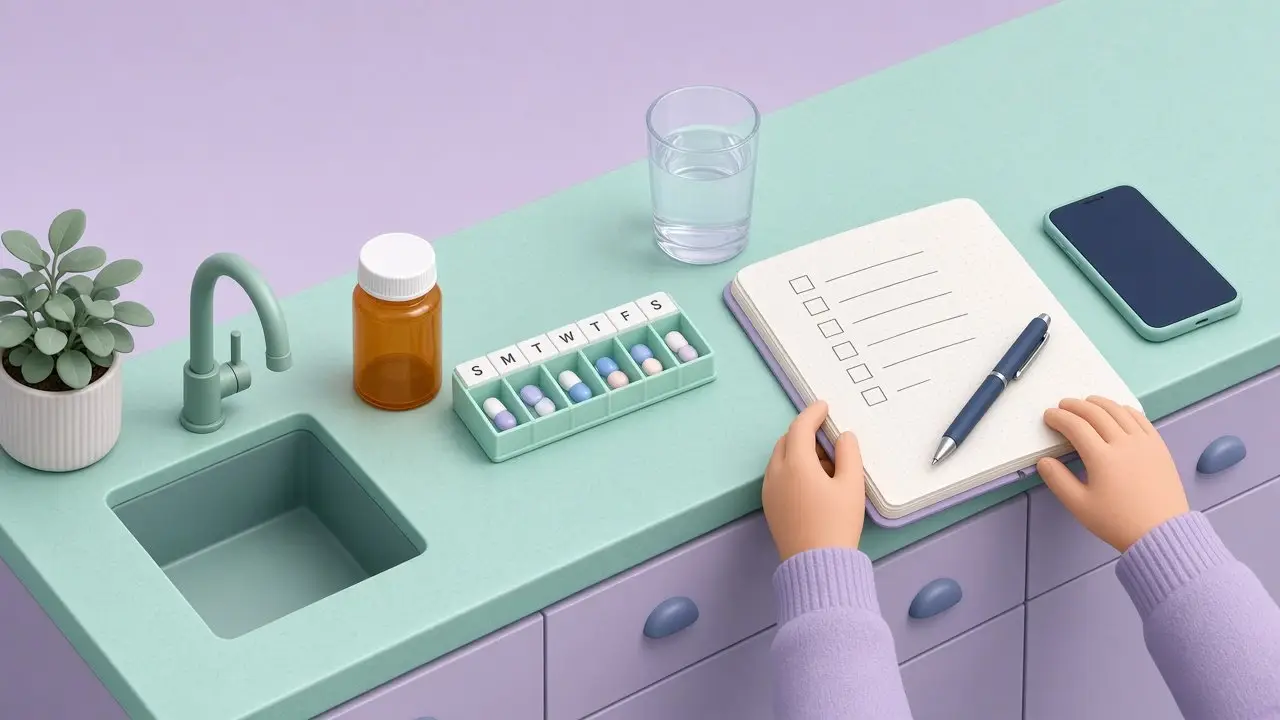
 Gabapentin is one of the most commonly prescribed medicines in the country. Doctors use it for seizures, nerve pain after shingles, restless legs, and a long list of other problems. Plenty of people in recovery have a bottle of it in the medicine cabinet, and many of them were told it’s “safe” or “not addictive.”
A new study gives us a clearer, more balanced picture. The short version: gabapentin on its own looks a lot less dangerous than opioids or benzodiazepines, but when it’s mixed with opioids, the risk climbs fast. That matters whether you take it, love someone who does, or work in the field.
What the researchers looked at
S. Karami and colleagues published the study in the journal Drug and Alcohol Dependence in February 2026 (read the abstract on PubMed). I first saw it summarized in Boston University’s Alcohol, Other Drugs, and Health: Current Evidence newsletter, in a review by Darius A. Rastegar, MD (read the BU summary).
The team used two big sources of information:
- Pharmacy records from 2013 to 2023, showing how many pills were dispensed across the U.S.
- Poison center reports from 2013 to 2022, showing when people ran into trouble with the drug.
They compared gabapentin with three other medicines: pregabalin (Lyrica), diazepam (Valium), and oxycodone.
One term to know: the researchers counted “nontherapeutic use.” In plain English, that means taking a medicine in a way other than as prescribed, such as misusing it or taking it to get high.
What they found
Prescribing grew fast, then leveled off. Gabapentin units dispensed rose from about 4.4 billion in 2013 to 7.7 billion in 2018, then held steady. Over the full 2013 to 2023 period, oxycodone fell from about 4.2 billion units to 2.5 billion, and diazepam fell from about 0.7 billion to 0.3 billion. The researchers note that some of gabapentin’s growth came as part of efforts to reduce opioid use.
Misuse cases were real, but lower per pill than opioids or benzos. Poison centers logged 8,729 nontherapeutic gabapentin cases from 2013 to 2022. That’s more than pregabalin (1,257) or diazepam (2,452), but about half the oxycodone total (17,808). Once the researchers adjusted for how many pills were out there, gabapentin’s rate (0.09 to 0.16 cases per million units) looked a lot like pregabalin’s and was well below diazepam (0.33 to 0.55) and oxycodone (0.39 to 0.85).
Mixing is where the danger lies. About 68% of gabapentin misuse cases involved more than one substance, especially opioids, and those cases had more severe outcomes. According to the BU summary, only 0.1% of single-substance gabapentin misuse cases ended in death, compared with 2% of cases involving opioids alone and 4% involving gabapentin plus opioids.
Why this matters for recovery
Here’s the takeaway in one line: gabapentin isn’t harmless, and the combination with opioids is the big red flag.
That aligns with a warning the U.S. Food and Drug Administration issued in December 2019. The FDA said gabapentin and pregabalin can cause serious breathing problems in people who also take opioids or other drugs that slow the central nervous system, in people with lung conditions like COPD, and in older adults (read the FDA safety communication).
Dr. Rastegar’s comment is also worth noting. Using gabapentin alone for chronic pain is probably less risky than using opioids, but it isn’t clear that adding gabapentin to opioids, in hopes of using fewer opioids, actually lowers the risk.
There’s one honest limit to keep in mind. Poison center data capture only reported cases, so the real numbers are likely higher. The study shows patterns, not every case.
Practical steps for people in recovery and families
- Tell every prescriber you’re in recovery. That includes dentists, surgeons, and urgent care. It’s not a confession. It’s important medical information.
- Ask before you start. Good questions: Why this medicine? Are there non-drug options? How will it interact with anything else I take?
- Never mix it with alcohol, opioids, or benzodiazepines unless your prescriber knows and is monitoring you.
- Don’t stop suddenly on your own. Prescribing guidance calls for tapering gabapentin, so talk to your prescriber first.
- Know the warning signs. The FDA lists confusion, unusual dizziness, extreme sleepiness, slowed or shallow breathing, unresponsiveness, and bluish lips, fingers, or toes. Any of these calls for emergency care.
- Keep naloxone on hand if opioids are in the picture. Naloxone reverses opioids, not gabapentin, but since most serious cases involve opioids too, it can still save a life. Call 911 either way.
- Store medicines safely and count pills if someone in the house is early in recovery.
Over more than 40 years in human services, since 1983, I’ve learned that good information beats fear every time. This isn’t about panic. It’s about asking good questions and having people in your corner. Scripture says it well: “Without counsel plans fail, but with many advisers they succeed.” Proverbs 15:22 (ESV).
If you want more on this subject, my older posts on pain pill dependence treatment and what a new smoke shop study means for recovery are good companions to this one. And if you need a reminder of what all this is for, read Why Recover?
So here’s my question for you: Is there a medicine in your cabinet you’ve never really asked your doctor about?
Sources
- Karami S, Yoo JW, Woods C, et al. Gabapentin utilization and nontherapeutic use relative to select comparator drugs, United States 2013-2022. Drug and Alcohol Dependence. 2026;279:113026. https://doi.org/10.1016/j.drugalcdep.2026.113026
- Rastegar DA. Increasing Utilization of Gabapentin in the US and Associated Harms. Alcohol, Other Drugs, and Health: Current Evidence, Boston University, September-October 2026. https://www.bu.edu/aodhealth/2026/10/28/increasing-utilization-of-gabapentin-in-the-us-and-associated-harms/
- U.S. Food and Drug Administration. Drug Safety Communication: Serious Breathing Problems with gabapentin and pregabalin. December 19, 2019. https://www.fda.gov/safety/medical-product-safety-information/neurontin-gralise-horizant-gabapentin-and-lyrica-lyrica-cr-pregabalin-drug-safety-communication
This post is for information only and isn’t medical advice. Please talk with your own doctor or pharmacist about any medicine you take.
Books quoted in this post:
- ESV Holy Bible: https://www.amazon.com/dp/1433503832?tag=happyrecove0e-20
As an Amazon Associate, I earn from qualifying purchases.
—
AI transparency: I used AI to condense this from the cited research and reviewed it before posting. Facts and quotes belong to the original sources.
Image created with AI assistance.