
This article first appeared on my LinkedIn.
I have worked in human services for over 40 years. I’ve witnessed significant change in so many areas of the field. AI is the newest, and the one practitioners argue about most. Here’s where I stand and how I got here.
A ZERO percent success rate
Early in my career, a psychologist in Albany, New York came in to train the agency where I worked. It was an adolescent facility for what we called, back then, “emotionally disturbed adolescents.” The closest term today is children and adolescents with Serious Emotional Disturbance (SED), or youth with serious emotional and behavioral disorders.
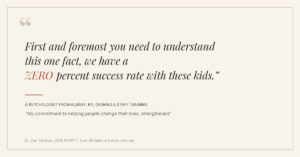
The doctor opened the training with this: “First and foremost, you need to understand this one fact: we have a ZERO percent success rate with these kids.”
My head spun with anger! I won’t go into my thoughts here, but you can only imagine. Something else happened in that room, though. My commitment to helping people change their lives got stronger and more determined. That was 1983, and I remember it like it was yesterday!
That commitment carried me far. I worked as a forensic and MICA intensive case manager in Suffolk County, directed a 100-bed supported housing program and an intensive forensic program on Long Island, earned my MSW at Fordham in 1997, founded a residential men’s addiction treatment center in South Florida, co-founded a behavioral health EHR company, and finished my Doctor of Social Work at Tulane in 2022. Today I’m a co-founder and HIPAA Compliance Officer at Pentester, and I run Chart Auditor. Both exist to protect the people we serve and the agencies that serve them.
The A-B-C’s and Step Ten at work
In 1997, I met a guy named Joe Ensor, a self-improvement guru. He taught me the A-B-C’s of Life:
- A: Always be positive.
- B: Be a student of life.
- C: Cheerlead others.
I took that seriously. I began to read more in my field and in self-growth, and I took Step Ten much more seriously, not only in my personal life but in my business life. Keep taking inventory. When you’re wrong, promptly admit it and fix it.
“Be a student of life” is why I’m writing about AI.
We’ve been scared before
I remember when program funding began to shift from grants and aid to managed care. The fear that hit was incredible. Authorizations, utilization review, outside reviewers questioning the level of care.
But regroup and move on was the call! We learned to document medical necessity, and the agencies that adapted kept serving people.
AI feels like that moment again.
How the field met AI
When ChatGPT popped onto the scene, and documentation tools followed, I heard quite a few professionals reject them outright. The younger generation and the technically inclined of all ages embraced them. Many clinicians used the tools to cut documentation time and focus on what they do best: serving people.
Then some of the most tech-savvy practitioners went to ChatGPT without a Business Associate Agreement (BAA), putting their professional licenses, careers, and agencies at risk. Of course they did not use PHI. Or so they thought. Hold that thought.
Our clients aren’t waiting. KFF reported in August 2026 that about one in six adults, including 28% of adults under 30, say they’ve used AI tools for mental health information or advice in the past year. A CE presentation I reviewed recently, Kathryn Krase’s “Artificial Intelligence: A Threat to Therapy or Powerful Problem-Solver?”, makes the point on its practical-guidance slide: nothing in life is free, so understand the real trade-offs.
The AI therapy chatbot trend, named accurately
Some companies are building AI that talks directly to clients. Here’s what’s on the record:
- Therabot (Dartmouth). A generative AI therapy chatbot tested in a randomized trial of 210 adults, published in NEJM AI in 2025. Participants had greater reductions in depression, anxiety, and eating-disorder symptoms than a waitlist group. The study team monitored its responses.
- Woebot. Woebot Health shut down its CBT chatbot app on June 30, 2025, with leadership pointing to the regulatory environment for these tools.
- The lawsuits. In January 2026, Character.AI and Google agreed to settle lawsuits brought by families, including Megan Garcia’s case over her 14-year-old son. Raine v. OpenAI, filed in August 2025 by the parents of 16-year-old Adam Raine, is still moving through San Francisco Superior Court, and no court has ruled on the allegations.
- The states. Illinois (the Wellness and Oversight for Psychological Resources Act, signed August 2025) and Nevada (AB 406) restrict AI from providing therapy. Utah requires mental health chatbots to disclose that they aren’t human and bars selling or sharing users’ identifiable health information. KFF also lists Tennessee, Vermont and Rhode Island among states restricting AI in mental health care.
These products learn from data: conversations, notes, transcripts. And yes, some of that learning could go into a bot built to replace you. “Oh, that will never happen,” you say! OK, you’re right. Probably. Maybe. Uh…
Cost: who’s paying for the low price?
AI is expensive to build and run, yet prices keep dropping. Stanford’s 2025 AI Index found the cost of running a model at GPT-3.5’s level fell more than 280-fold between November 2022 and October 2024.
But corporations are in business to make a profit. If something costs $10 to produce and sells for $5, how do they profit? They don’t, right? Not on the sale. So ask where the rest of the value comes from. Here’s the truth of the matter: the data you supply, the same data you pay a vendor to help you with, can be used to improve their product and get them better at what they do.
My rule of thumb after years on both the provider side and the vendor side: the less you pay for an AI product, the more likely it is that your data, or your patients’ data, is part of somebody’s business model. That’s my opinion, not a law of nature, and it’s exactly why you read the terms.
Now look at private addiction treatment. In my experience, the cost to acquire a single admission typically runs around $7,000, and industry benchmarks back that up. One rehab marketing firm reports $7,000 to $15,000 per admission for out-of-network detox and residential, and another agency’s 2025 dataset averaged $16,608 across 994 admissions. When one admission costs that much to land, data showing who is searching for treatment is gold to the next rehab trying to fill beds. You can only imagine what you can do with it.
That’s not hypothetical. In 2024, the FTC and DOJ took action against Monument, an online alcohol addiction treatment service that called itself “100% confidential” and “HIPAA compliant,” for allegedly sharing users’ health information with advertising platforms like Meta and Google through tracking pixels. Monument’s own review found data on more than 80,000 users may have been disclosed. In 2023, the FTC ordered BetterHelp to pay $7.8 million over allegations that it shared health questionnaire answers with Facebook, Snapchat, and others for advertising. You think that they are the only ones? Hmmm…
“We didn’t use PHI.” Are you sure?
HIPAA’s Safe Harbor method treats data as de-identified only when you remove 18 types of identifiers. The list includes names, any geography smaller than a state (most ZIP digits included), every date element except the year, contact details, record and account numbers, device identifiers, IP addresses, biometrics, full-face photos, and any other unique identifying characteristic. Even then, the organization can’t know for sure whether what’s left could identify the person.
Now picture a typical “anonymous” prompt and watch what slips through:
- Birth date and ZIP. Latanya Sweeney’s analysis of 1990 Census data found 87% of the U.S. population was likely unique on just a five-digit ZIP, gender, and date of birth.
- Dates of service. “Admitted 3/14, stepped down to IOP 4/2.” Those are date elements Safe Harbor requires you to remove.
- Rare diagnoses. A rare condition in a small county narrows the list fast.
- Free-text details. The client’s employer, “the only pharmacist in town,” a named sibling, the car accident that made the local news.
- Everything together. Rocher and colleagues, writing in Nature Communications in 2019, estimated that 99.98% of Americans would be correctly re-identified in any dataset using 15 demographic attributes.
Why would someone take the time and effort to put that back together? Why would a scammer call your grandmother and get her to send $50,000 to get you out of jail in Canada? Because it pays. Treatment data is valuable to marketers, scammers, and extortionists.
Why agencies shun the tools, and what I’d say back
“We can’t afford it.” Budgets are limited, and too often tools get picked on price instead of effectiveness, security, and the safety of the people we serve. But weigh the cost of a properly contracted tool against the cost of a single breach or a payer claw back.
“My EHR does it.” Usually it doesn’t, even when the vendor says it does. I co-founded a behavioral health EHR company, so I say this with some sympathy. Many EHRs are antiquated, and they can’t integrate new technology without rewriting it all. So AI gets bolted on as patchwork, and patchwork traditionally causes issues: features that don’t talk to each other, more interfaces, more vendors in the data path, and more places for security gaps to hide. On the chart-checking side, built-in EHR audits mostly look for compliance items like signatures, dates, and blank fields. That’s useful, but it isn’t an audit against insurance medical necessity guidelines like the ASAM Criteria for addiction level of care, LOCUS for psychiatric level of care, or each payer’s own criteria. A note can be signed, dated, and complete and still fail to justify the level of care you billed. That gap is exactly where Chart Auditor fits.
“HIPAA won’t let us.” HIPAA isn’t a reason to avoid AI. It’s a reason to get a BAA and protect yourself. OpenAI, for example, offers a BAA for eligible API use and for sales-managed ChatGPT Enterprise and Edu accounts, and its help center states it does not offer one for ChatGPT Business. A free consumer chatbot with no BAA is no place for client information.
The cyber side: the doors are usually ordinary
Why do I post the breaches daily? Because if you are in the dark, you can not make prudent decisions, so I am bringing it to light. A few recent ones make the point:
- Change Healthcare. UnitedHealth CEO Andrew Witty testified that attackers used compromised credentials to get into a Citrix remote-access portal that didn’t have multi-factor authentication. Change later told HHS that about 192.7 million people were affected.
- Central Ohio Primary Care. On October 15, 2026, COPC disclosed a “vishing” (voice phishing) attack, discovered August 25, that may have exposed data on about 1.4 million people, including Social Security numbers and limited health information.
- Integration weak spots. On October 15, 2026, CISA published an advisory on dcm4che, an open-source medical imaging archive. Among the flaws: in its default configuration, the HL7 listener accepts patient-merge messages without authenticating who sent them. A fix exists, and CISA reports no known exploitation, but that’s patchwork integration risk in writing.
A stolen password, a phone call, a default setting. A good penetration test finds those before somebody else does.
Why Pentester and Chart Auditor
Pentester tests your defenses the way an attacker would, at a price smaller organizations can manage. Chart Auditor audits behavioral health documentation against medical necessity standards, so your notes hold up when a payer comes looking. Both are priced for behavioral health budgets, not hospital budgets.
And I’ll say this plainly: we do not sell your data.
Now do me a favor. Ask your EHR vendor, your AI scribe, your billing company, and your marketing vendors:
- Do you use our data or our patients’ data for anything beyond providing our service?
- Do you de-identify it and then use, share, or sell it?
- Do you train AI models on it?
- Where does the contract say so?
I’m not saying every vendor does this. I’m saying some have, as the FTC, DOJ and court records above show, and HIPAA allows properly de-identified data to be used for any purpose. Practice Fusion, an EHR vendor, paid $145 million in 2020 and admitted taking kickbacks from an opioid maker to build prescribing alerts into its software. A pending class action alleges Otter.ai’s notetaker recorded conversations and used them to train AI. You deserve a straight answer, in writing.
Regroup and move on
Back to that training room in Albany. Zero percent. I didn’t accept it then, and I won’t accept the idea now that our field has to choose between ignoring AI and handing over the people we serve. Always be positive. Be a student of life. Cheerlead others. Take inventory, admit where we went wrong, and fix it.
Then regroup and move on…
Sources
- Krase, K. S. “Artificial Intelligence: A Threat to Therapy or Powerful Problem-Solver?” CE presentation, Krase Consulting.
- KFF, “Different State Regulatory Approaches Reflect Open Questions About AI Mental Health Tools,” Aug. 27, 2026: https://www.kff.org/health-information-trust/different-state-regulatory-approaches-reflect-open-questions-about-ai-mental-health-tools/
- Heinz et al., “Randomized Trial of a Generative AI Chatbot for Mental Health Treatment,” NEJM AI (2025): https://ai.nejm.org/doi/full/10.1056/AIoa2400802
- Telehealth.org, “What Woebot’s Exit Signals for Clinicians”: https://telehealth.org/news/ai-psychotherapy-shutdown-what-woebots-exit-signals-for-clinicians/
- CNN, “Character.AI and Google agree to settle lawsuits over teen mental health harms and suicides,” Jan. 7, 2026: https://www.cnn.com/2026/01/07/business/character-ai-google-settle-teen-suicide-lawsuit
- AI Lawsuit Tracker, Raine v. OpenAI (CGC-25-628528): https://ailawsuittracker.com/cases/raine-v-openai-matthew-and-maria-raine-cgc-25-628528/
- AP News, “States struggle with AI therapy app rules”: https://apnews.com/article/ai-therapy-ban-illinois-therabot-dfc5906b36fdd1fe8e8dbdb4970a45a7
- Utah Code Title 13, Chapter 72a: https://le.utah.gov/xcode/Title13/Chapter72A/C13-72a_2025050720250507.pdf
- Stanford HAI, 2025 AI Index Report: https://hai.stanford.edu/ai-index/2025-ai-index-report/research-and-development
- RehabAdmit, “5 Numbers Every Rehab Executive Should Watch”: https://rehabadmit.com/blog/rehab-executive-kpis-benchmarks/
- Webserv, “Rehab Patient Acquisition”: https://webserv.io/resources/playbooks/rehab-patient-acquisition/
- FTC, Monument press release, April 2024: https://www.ftc.gov/news-events/news/press-releases/2024/04/alcohol-addiction-treatment-firm-will-be-banned-disclosing-health-data-advertising-settle-ftc
- FTC, BetterHelp final order, July 2023: https://www.ftc.gov/news-events/news/press-releases/2023/07/ftc-gives-final-approval-order-banning-betterhelp-sharing-sensitive-health-data-advertising
- 45 CFR 164.514(b)(2): https://www.ecfr.gov/current/title-45/subtitle-A/subchapter-C/part-164/subpart-E/section-164.514
- HHS, De-identification Guidance: https://www.hhs.gov/hipaa/for-professionals/special-topics/de-identification/index.html
- HHS, Workshop on the De-Identification Standard: https://www.hhs.gov/hipaa/for-professionals/privacy/special-topics/de-identification/2010-de-identification-workshop/index.html
- Sweeney, L. “Simple Demographics Often Identify People Uniquely”: https://dataprivacylab.org/projects/identifiability/paper1.pdf
- Rocher, Hendrickx & de Montjoye, Nature Communications (2019): https://www.nature.com/articles/s41467-019-10933-3
- OpenAI Help Center, “Getting a Business Associate Agreement for the OpenAI API”: https://help.openai.com/en/articles/8660679-getting-a-business-associate-agreement-for-the-openai-api
- Witty, A., testimony to House Energy and Commerce, May 1, 2024: https://democrats-energycommerce.house.gov/sites/evo-subsites/democrats-energycommerce.house.gov/files/evo-media-document/Testimony_Witty_OI_2024.05.01.pdf
- HHS OCR, Change Healthcare FAQ: https://www.hhs.gov/hipaa/for-professionals/special-topics/change-healthcare-cybersecurity-incident-frequently-asked-questions/index.html
- COPC, Cybersecurity Information: https://www.copcp.com/company-news/copc-cybersecurity-information/
- CISA, ICSMA-26-288-02 J4Care dcm4che, Oct. 15, 2026: https://www.cisa.gov/news-events/ics-medical-advisories/icsma-26-288-02
- DOJ, Practice Fusion $145 million resolution, Jan. 27, 2020: https://www.justice.gov/archives/opa/pr/electronic-health-records-vendor-pay-145-million-resolve-criminal-and-civil-investigations-0
- NPR, “Lawsuit claims AI service Otter secretly records private chats,” Aug. 15, 2025: https://www.npr.org/2025/08/15/g-s1-83087/otter-ai-transcription-class-action-lawsuit
—
AI transparency: I used AI to condense this from the cited reporting and reviewed it before posting. Facts and quotes belong to the original source.
Image created with AI assistance.