
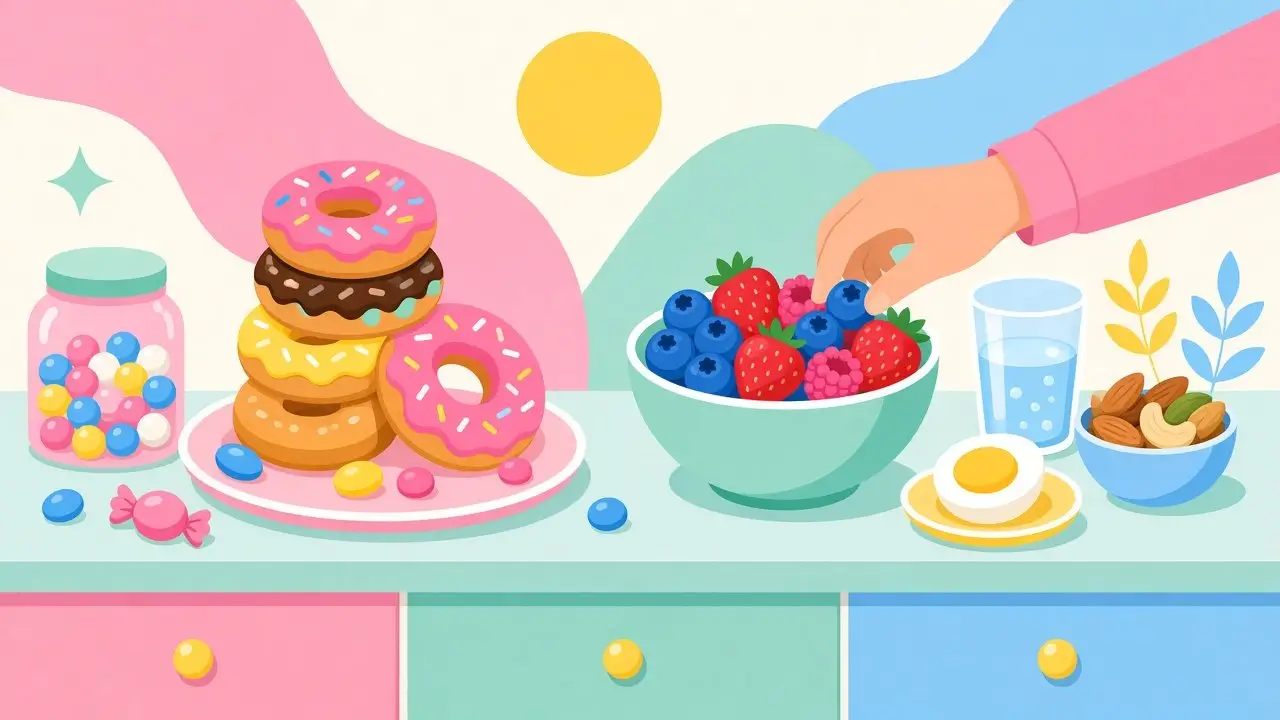
 A few weeks sober and suddenly you can’t walk past a donut? You’re polishing off a pint of ice cream at 10 p.m. and wondering what happened to you?
You’re not alone. Many people in early recovery notice a strong pull toward sweets. Let’s talk about why that may happen and what you can do about it, without beating yourself up.
Quick note first: I’m a social worker and a person in recovery, not a doctor or dietitian. What follows is general information. If you have diabetes, blood sugar problems, an eating disorder, or any health concern, talk with your doctor before making changes.
Why sweets can show up in early recovery
Researchers are still sorting out exactly why sugar cravings are so common in early sobriety, and the answer probably differs from person to person. A few things seem to play a part:
- Your body is relearning normal eating. Many of us ate irregularly, or barely at all, while drinking or using.
- Your brain is looking for comfort and reward. Sweets are quick and easy.
- Alcohol itself is a big source of sugar and calories, so when it’s gone, some people notice the gap.
- Hunger can feel like a craving. This one surprises people.
The National Library of Medicine’s MedlinePlus page on substance use recovery and diet says it plainly: “Substance use causes a person to forget what it is like to be hungry and instead think of this feeling as a drug craving.” It adds that a person “should be encouraged to think that they may be hungry when cravings become strong.”
That’s a powerful idea. Sometimes the craving isn’t about the drink at all. It’s about lunch!
First things first
Here’s the part I want you to really hear. MedlinePlus also says, “it is more important that the person avoid returning to substance use than sticking with a strict diet.”
Amen to that. A cookie is not a relapse. In Success-Full, Living Life with Purpose: Recovery Mode, I put it my own blunt way: “Remember, don’t drink or drug, even if your ass falls off!” Staying sober comes first. Everything else can wait.
So if you’ve been piling guilt on yourself over a candy bar, drop it. Progress, not perfection.
Practical ways to steady things out
Once you’re on steadier ground, a few simple habits may help take the edge off. These align with the general guidance on that same MedlinePlus page, which recommends regular mealtimes, more protein, complex carbohydrates, fiber, and enough fluids.
- Eat on a schedule. Regular meals and a snack or two keep you from hitting that starving, grab-anything point.
- Add protein and fiber. Eggs, beans, yogurt, nuts, whole grains, and vegetables tend to keep you full longer than sweets alone.
- Drink water. Dehydration is common in early recovery, and thirst can easily be mistaken for something else.
- Plan your treat. Instead of fighting every craving, choose a reasonable sweet on purpose, sit down, and savor it.
- Run HALT. Are you hungry, angry, lonely, or tired? Feed the real need first.
- Sleep. Being worn out can make all kinds of cravings louder. My post on sleep in early recovery has a simple trick worth trying.
When to check in with a doctor
Get a checkup if you’re in early recovery, especially if you drank heavily. MedlinePlus notes that alcohol use is a major cause of nutritional deficiencies, most often in B vitamins, and that supplements should be taken as recommended by your health care provider. A doctor can run simple tests, check your blood sugar, and help you build a plan that fits you. Please don’t guess on supplements or crash diets on your own.
Watch out for swapping one habit for another
A bowl of ice cream now and then is fine. But if you notice you’re eating to numb out, hiding food, or feeling out of control, say so to someone you trust, and mention it to your doctor or counselor. Recovery is about freedom, including freedom from new chains. I wrote about how sneaky those can be in The chains of habit.
Grateful for a body that’s healing
Over more than 40 years in human services, I’ve watched people’s faces, skin, and energy come back to life as their bodies heal in sobriety. It’s a miracle to see. Treat your body kindly while it does that work. Feed it well, rest it, and give it time.
I’m grateful to be sober today and to enjoy a good meal, and yes, the occasional slice of pie, with a clear head. Life is GOOOOOOOD!!!
So here’s my question for you: The next time a sugar craving hits, what’s one question you’ll ask yourself before you reach for the sweets?
Go, Go, Go… Dan 🙂
Books quoted in this post:
As an Amazon Associate, I earn from qualifying purchases.
—
Reflection note: I wrote this from my own experience in recovery and in human services. This post is general information, not medical advice. Quotes belong to their original sources (MedlinePlus, “Substance use recovery and diet,” U.S. National Library of Medicine, https://medlineplus.gov/ency/article/002149.htm; Success-Full, Living Life with Purpose: Recovery Mode). I used AI to help organize it and reviewed it before posting.
Image created with AI assistance.